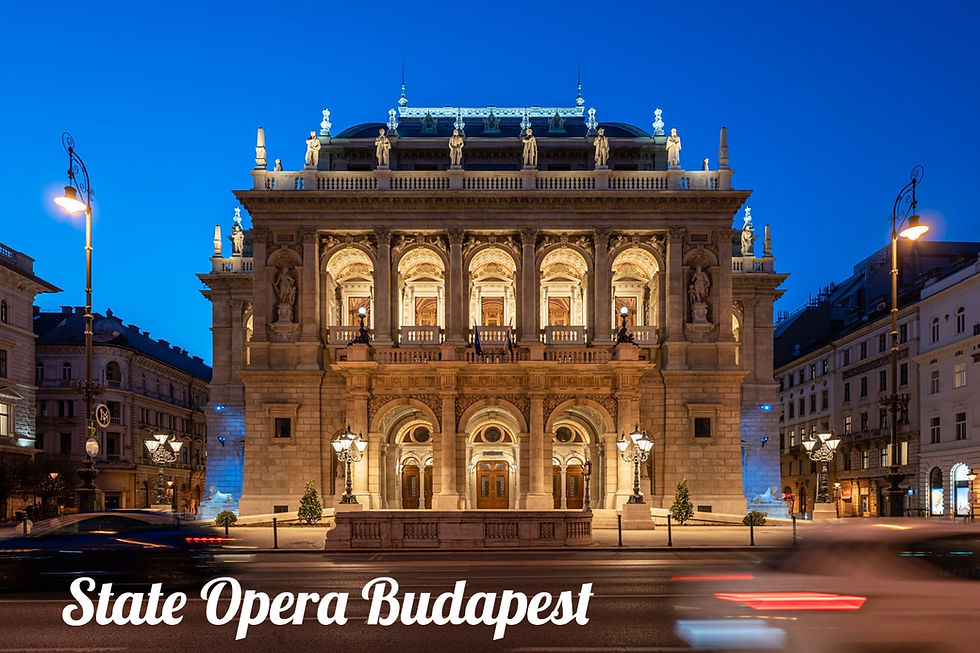
The Best of Hungarian Cuisine
Updated: Aug 6
Hungarian cuisine is a reflection of its vibrant history, blending culinary influences from Central Europe, Asia, and beyond. Hungarian food is known for its bold flavors, generous use of paprika (sweet or spicy red pepper), and hearty dishes that are perfect for the country's cold winters.

Hungarian Goulash Soup, source: Unsplash

The Historical Tapestry of Hungarian Cuisine
Hungarian cuisine is deeply rooted in the country’s history and geography. The nomadic Magyars, who settled in the Carpathian Basin around the 9th century, brought with them a meat-heavy diet that featured stews and soups. Over the centuries, Hungarian cooking has been influenced by various cultures due to the country’s location at the crossroads of Europe.
The Ottoman occupation from the 16th to the 17th century introduced new ingredients and cooking methods, including the use of paprika, which is now a cornerstone of Hungarian cuisine.
The Austro-Hungarian Empire’s influence can be seen in the popularity of pastries and coffeehouses. Additionally, Hungarian Jews and Romani communities have also contributed significantly to the rich culinary tapestry.
A Day of Hungarian Dining
Breakfast (Reggeli)
Hungarian breakfasts are usually simple but hearty, designed to provide energy for the day ahead. A typical Hungarian breakfast usually consists of savoury and/or sweet food:
Bread rolls: round buns (zsömle) or crescent-shaped bread rolls (kifli), often served with butter or jam
Salami and Sausage (szalámi és kolbász): various types, including spicy sausages
Cold cuts: e.g. ham, sliced meats, deli meats - typically as a sandwich topping
Fresh vegetables: tomatoes, (bell) pepper, onion
Túró Rudi (a local sweet): A sweet treat consisting of a chocolate-coated curd cheese bar
Pastries: Freshly baked croissants and pastries
Cereals: oats, muesli, granola, etc.
Milk products: Often consumed alongside breakfast, with variations including cheese, yogurt or kefir
Hot drinks: black or fruit tea, coffee, or cocoa
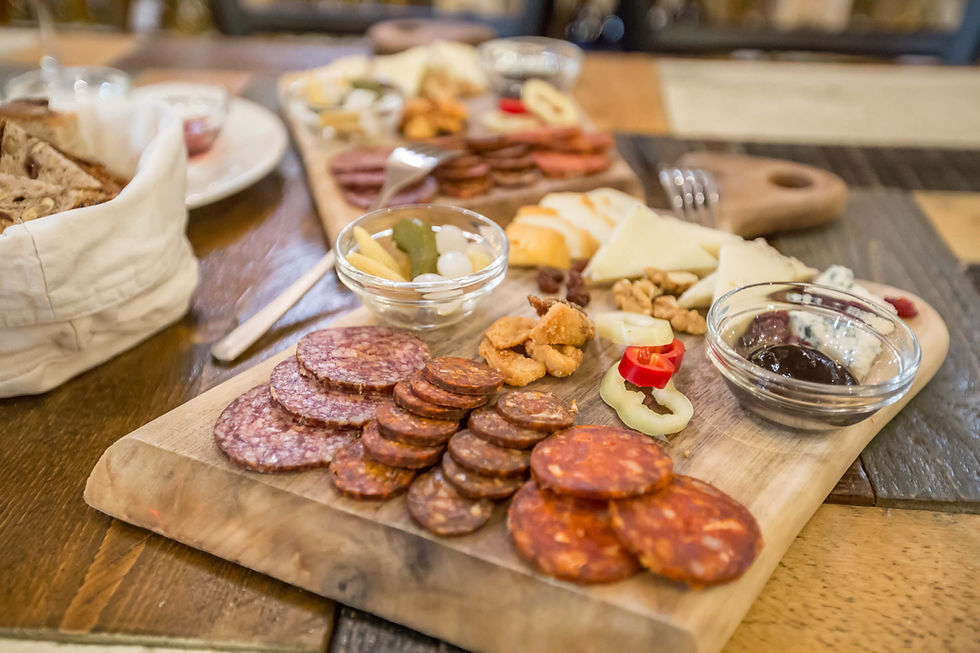
A Traditional Hungarian Cold Plate
Lunch (Ebéd)
Lunch is the main meal of the day in Hungary and typically includes multiple courses: a starter, a soup, a main course, and dessert.
Starters (Előételek):
Liptauer (körözött): A creamy spread made from fresh cheese mixed with paprika, onions, and spices, often served with bread
Hortobágyi Palacsinta: Crepes filled with a savory meat mixture and baked in a creamy paprika sauce
Foie Gras: goose or duck liver - Hungary is at the forefront of global foie gras production, it is also a distinctive characteristic of Hungarian cuisine, as one of its tastiest and most valuable ingredients
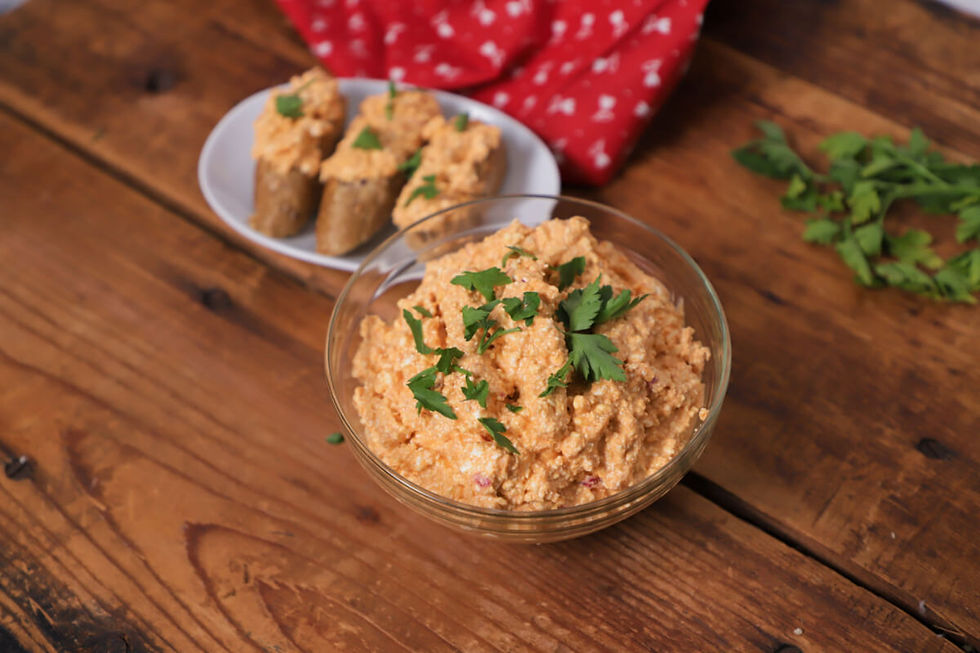
Liptauer (körözött), source: mindmegette

Hortobágyi Palacsinta: crepes filled with a savory meat mixture and baked in a creamy paprika sauce, source: mindmegette
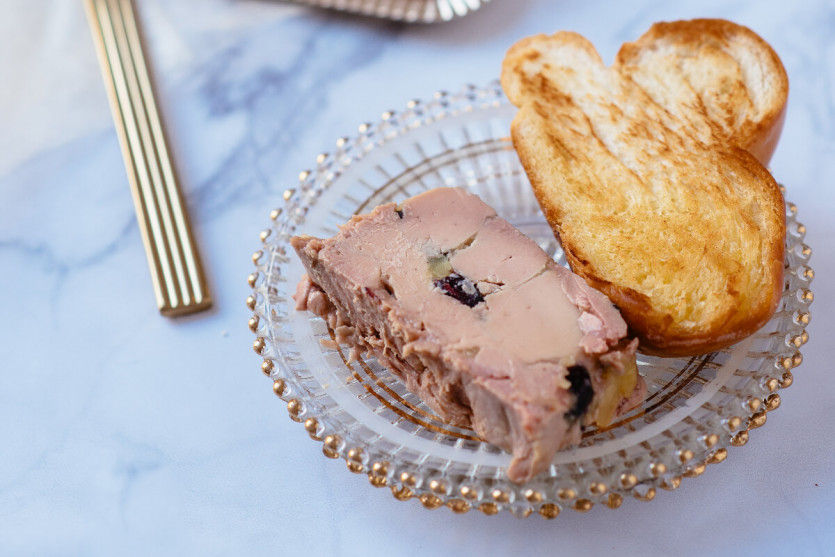
Foie Gras: goose liver with dried cranberries, source: mindmegette
Hungarian Cuisine - Soups (Levesek):
Goulash (Gulyás): A rich, hearty soup made from beef, potatoes, and plenty of paprika
Fisherman’s Soup (Halászlé): A spicy soup made with freshwater fish, tomatoes, and hot paprika
Hen Soup in Ede Újházy Style (Újházi tyúkhúsleves): it is a traditional Hungarian chicken noodle soup recipe, and this hearty, warming dish is popular during celebrations and festivities. A whole chicken is made fork-tender by the low and slow cooking and is accompanied by plenty of vegetables, creating this rich and fragrant soup perfect for Sunday lunch.
Jókai Bean Soup (Jókai bableves): is one of the most popular comfort foods in Hungary. It was named after the famous Hungarian writer Mór Jókai, because he was a big fan of this soup. A slowly cooked soup with smoked meat, beans, vegetables and noodles – a satisfying soup for cold days
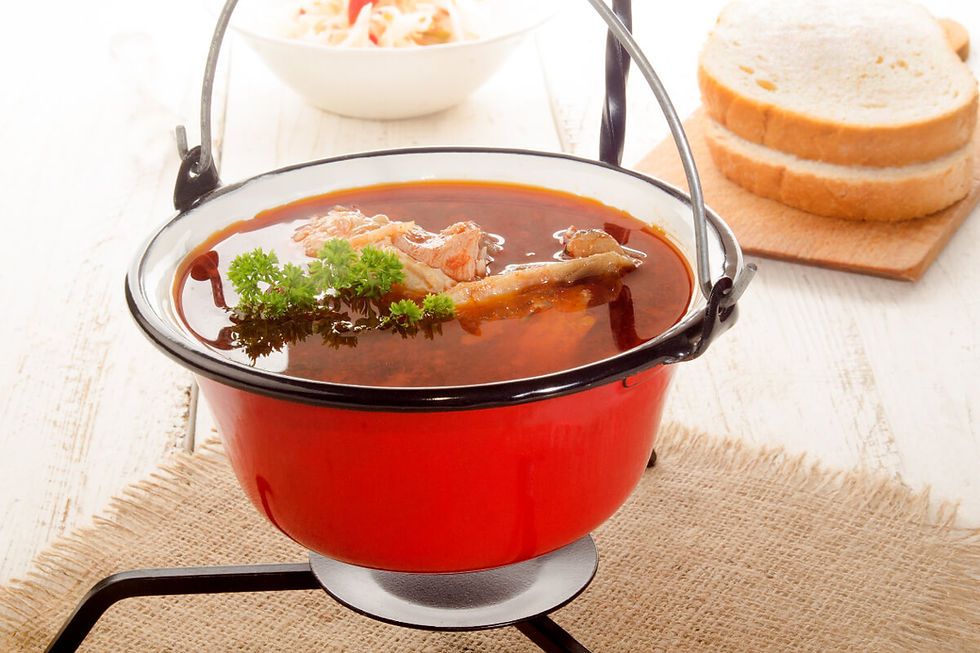
Fisherman’s Soup (Halászlé), source: mindmegette

Hen Soup in Ede Újházy Style (Újházi tyúkhúsleves), source: mindmegette

Jókai Bean Soup (Jókai bableves), source: mindmegette
Hungarian Cuisine - Main Courses (Főételek):
Chicken Paprikash (Paprikás Csirke): Chicken cooked in a creamy paprika sauce, usually served with 'galuska' (small dumplings)
Stuffed Cabbage (Töltött Káposzta): Cabbage leaves stuffed with a mixture of minced pork and rice, simmered in a paprika-infused tomato sauce
Beef stew (Marhapörkölt): A slow-cooked meat stew, similar to goulash but thicker and served over noodles or potatoes

Chicken Paprikash (Paprikás Csirke), source: mindmegette

Stuffed cabbage, source: mindmegette
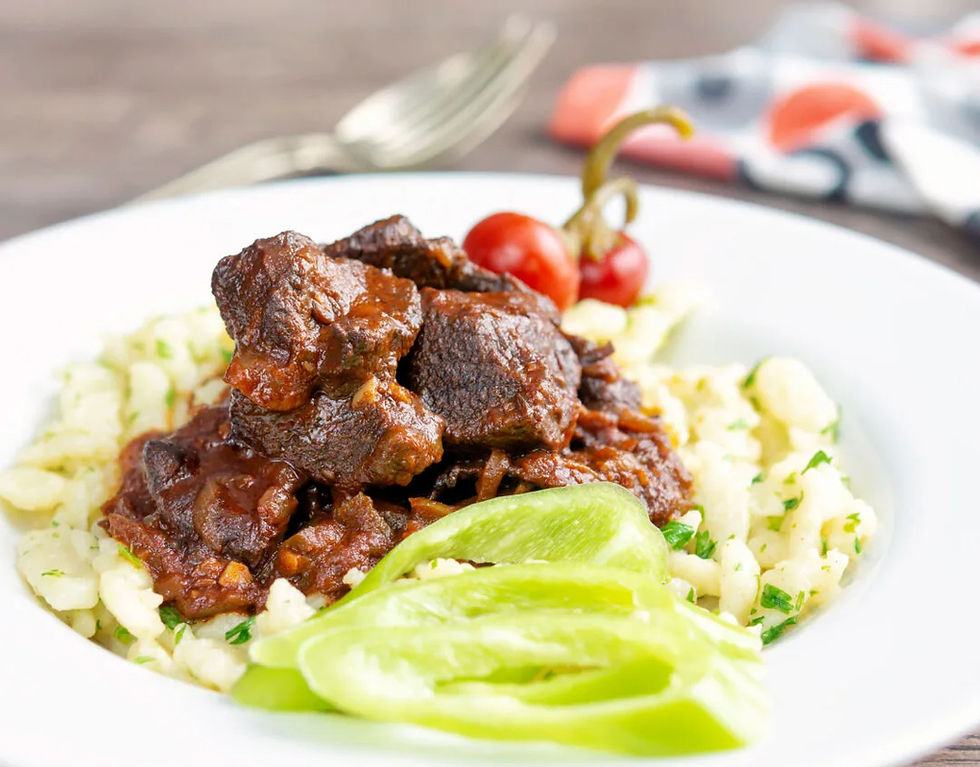
Hungarian Beef stew
Hungarian Cuisine - Desserts (Desszertek):
Dobos Torte: A multi-layered sponge cake filled with chocolate buttercream and topped with caramel. The layered pastry is named after its inventor, Hungarian chef József C. Dobos, a delicatessen owner in Budapest.
Somlói Galuska: A trifle-like dessert made from sponge cake, chocolate sauce, rum, and whipped cream.
Hungarian pancakes (Palacsinta): Hungarian pancakes are thin crepes, rolled up and sprinkled with powdered sugar. There are several things you can fill the palacsinta with, like apricot, strawberry or blueberry jam, vanilla or chocolate pudding, apple sauce with cinnamon, ground walnut, or cocoa powder.

Dobos Torte, source: mindmegette

Somlói Galuska, source: mindmegette

Hungarian pancakes (Palacsinta), source: mindmegette
Dinner (Vacsora)
Dinner in Hungary is typically lighter than lunch and might include cold dishes, sandwiches or simple hot meals.
Hungarian Street Food
Lángos (fried bread dough): lángos is a famous Hungarian street food, which is basically a fried bread dough. The basic dough is made of water (or milk), yeast, flour and salt. The yeast creates air bubbles in the dough. If it’s well kneaded and fried, the flatbread won’t be heavy and thick. Lángos is fried in oil and usually served with toppings. For Hungarians, the most popular topping is cheese and sour cream, with an extra garlic sauce spread on the dough before adding the topping.
Kürtőskalács (Chimney Cake): A sweet, spiral-shaped pastry coated in sugar and cinnamon.

Lángos (fried bread dough) with garlic, sour cream and cheese, source: mindmegette

Kürtőskalács (Chimney Cake), source: mindmegette
Hungarian Drinks
Hungarians enjoy a wide variety of both alcoholic and non-alcoholic beverages, many of which are integral to their culinary culture.
Local Non-Alcoholic Drinks:
Kávé (Coffee): Coffee culture is strong in Hungary, with traditional coffeehouses serving espresso and various coffee drinks.
Tea: Black and Herbal teas are popular, especially in the colder months.
Gyümölcslé (Fruit Juice): Freshly squeezed juices are common.
Szörp (syrup): A syrup made from fruit that is diluted with water to make a refreshing drink.

Local Alcoholic Drinks:
Fröccs (Hungarian wine spritzer): The Hungarians claim it as their own, as legend has it that Ányos Jedlik, the inventor of the soda syphon, created the drink when he squirted some fizzy water into his wine, calling it 'spricc', at a gathering of friends. There are several terms to describe the full range of fröccs you can ask for.

If you’d like to get your fröccs in the right proportions, you’ll need to learn a few names:
Wine to Soda ratio | English name | Hungarian name |
1 dl wine to 1 dl soda wate | small spritzer | kisfröccs |
2 dl wine to 1 dl soda water | large spritzer | nagyfröccs |
1 dl wine to 2 dl soda water | long step spritzer | hosszúlépés |
1 dl wine to 3 dl soda water | squirrel jump spritzer | mókusugrás |
1 dl wine and 4 dl soda water | sport spritzer | sportfröccs |
2 dl wine to 3 dl soda water | vice concierge spritzer | viceházmester |
3 dl wine to 2 dl soda water | concierge spritzer | házmester |
4 dl wine to 1 dl soda water | landlord spritzer | háziúr |
6 dl wine to 3 dl soda water | named after the famous Hungarian soccer player Öcsi Puskás | Puskás fröccs |
1 dl wine to 9 dl soda water | long jump spritzer | távolugrás |
4 dl wine to 6 dl soda water | deputy mayor spritzer | alpolgármester |
6 dl wine to 4 dl soda water | mayor spritzer | polgármester |
7 dl wine to 3 dl soda water | Avasi spritzer | Avasi fröccs |
9 dl wine to 1 dl soda water | named after the famous Hungarian writer Gyula Krúdy | Krúdy fröccs |
5 dl wine to 5 dl soda water | “biff” spritzer | maflás |
Pálinka: A traditional Hungarian fruit brandy that is a must-try. It can be made from various fruits, including apricots, plums, and cherries. Pálinka is a strong drink with an alcohol content that ranges from 37% to 55%.
Unicum: A herbal liqueur made from a secret blend of over 40 herbs, known for its medicinal properties, with an alcohol content of 40%.
Tokaji Wine: Hungary’s famous sweet wine, often referred to as "the king of wines and the wine of kings." Unlike most other wines, alcohol content of aszú typically runs higher than 14%.
Egri Bikavér (Bull’s Blood): A robust red wine from the Eger region, with around 14% of alcohol content.


Regional Variations and Specialties
Hungarian cuisine varies by region, with each area boasting its own specialties and traditions.
Budapest: As the capital, Budapest offers a cosmopolitan dining scene with a mix of traditional and contemporary Hungarian dishes.
Hortobágy: Known for its pastoral landscapes, this region is famous for its Hortobágyi Palacsinta and lamb dishes.
Transdanubia: This western region is known for its rich stews and pastries, influenced by Austrian cuisine.
Seasonal Foods
Hungarian cuisine also changes with the seasons and is marked by various festive dishes.
Spring: Fresh greens and herbs feature prominently, with dishes like Green Peas Soup.
Summer: The season of fresh fruits and vegetables, with dishes like Lecsó (a vegetable stew made from tomatoes, peppers, and onions).
Autumn: Harvest season brings dishes like Stuffed Peppers and Mushroom Paprikash.
Winter: Hearty dishes are essential, with Cabbage Rolls and Kocsonya (pork aspic) being popular.
Festive foods
Christmas: Halászlé (Fisherman’s Soup) and Beigli (a rolled pastry filled with poppy seeds or walnuts).
Easter: Lamb dishes and Easter Ham served with horseradish and eggs.
Hungarian cuisine offers a rich tapestry of flavors and traditions that reflect the country's diverse history and cultural influences. From hearty breakfasts to elaborate lunches and light dinners, Hungarian food is a celebration of bold spices, fresh ingredients, and time-honored cooking methods. Whether you're indulging in a comforting bowl of goulash, savoring the sweet layers of a Dobos Torte, or sipping on a glass of Tokaji wine, the culinary delights of Hungary promise a memorable and delicious journey.
Bon appétit, or as the Hungarians say, Jó étvágyat!

Did you know?
We have lots of other posts for you to enjoy!
Click the below links!
See all Gems of Budapest posts: |