


2 Days in Budapest: The Perfect First Visit To The City
Updated: Sep 4
For first-time visitors Budapest often feels refreshingly different from Western European capitals. It has the elegance of Vienna, the atmosphere of Prague and the energy of a modern European city, but it remains affordable and full of surprises.
If you only have two days in Budapest, the key is not trying to see everything. This 2-day itinerary focuses on the essential Budapest experience: the iconic sights, the history, the views and the local atmosphere that make the city unforgettable. This isn't a checklist of Budapest's attractions - the route is designed to connect the sights in a meaningful and interesting way.
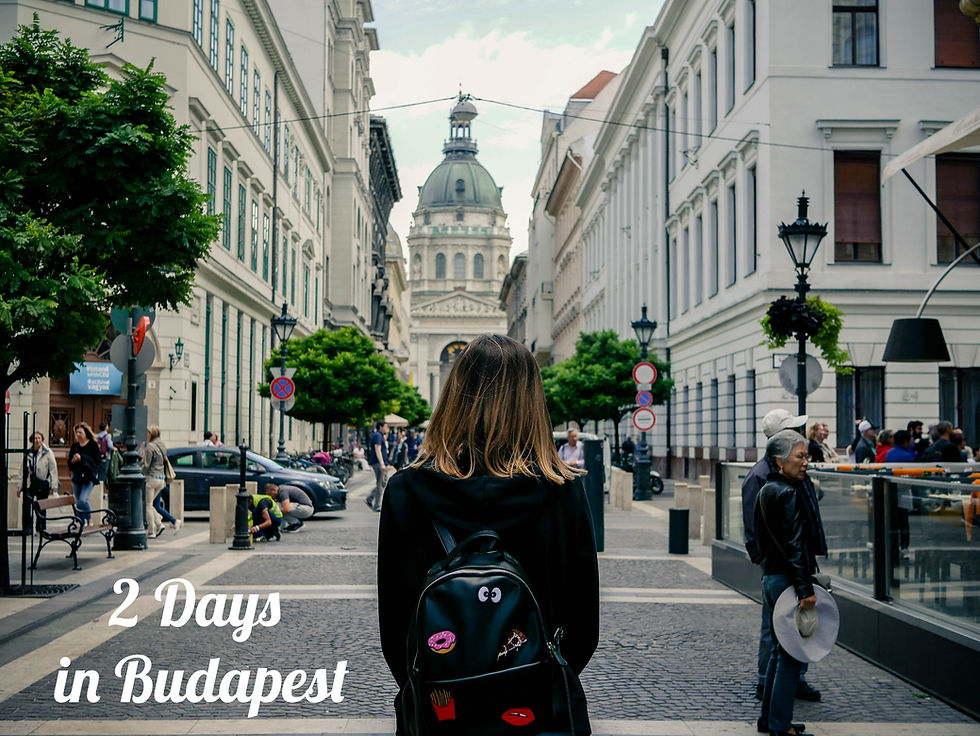
Suggestion for a 2-day itinerary for your first visit to Budapest
Day 1: Discover Downtown Budapest
Day 1 - Morning: Parliament, Shoes on the Danube Bank, Liberty Square and St. Stephen's Basilica
Begin your Budapest adventure by the Danube, the river that defines the character of the city.

Practical Tips for Day 1 - Morning
Distance: approximately 2-2.5 km (around 1.2-1.4 miles), depending on the exact route taken and how much you explore each attraction.
Walking time: Allow 2–3 hours for the route if you want time to explore the Parliament area, Shoes on the Danube, Liberty Square and the Basilica.
Use Google Maps in walking mode, but don't always follow its shortest suggested route around the riverfront.
Book your ticket online in advance if you would like to visit the Pariament Building inside.
Be respectful at the Shoes on the Danube memorial and avoid treating it simply as a photo stop.
After the Shoes memorial, head towards Garibaldi street to leave the lower Danube embankment and reach the upper streets more easily. Use the pedestrian crossing there before continuing to Liberty Square.
Allow 20–30 minutes for Liberty Square (Szabadság tér). There is much more to see here than the attractive park itself, including several historically significant monuments and buildings.
Wear comfortable shoes and bring water, particularly in summer. The riverside section is exposed to sun and wind.
St. Stephen's Basilica is a convenient endpoint, with plenty of cafés, restaurants and public transport connections nearby.
Start in the center of Kossuth Lajos Square (which can be reached by metro, tram or on foot) and walk around the square toward the Parliament Visitor Center - if you plan to visit the Parliament inside (well worth it), don't forget to book your tickets online in advance. This route gives visitors a good opportunity to appreciate the building from the square before heading toward the river.
The Hungarian Parliament Building is the perfect first stop. Rising dramatically on the riverbank, this Neo-Gothic masterpiece is one of Europe’s most impressive government buildings. It represents Hungary’s ambition during the late 19th century, when Budapest was becoming one of the capitals of the Austro-Hungarian Empire. Take time to admire the exterior from the riverside. Many visitors immediately recognize the building from photographs, but seeing it in person reveals its enormous scale and intricate details.

From the Visitor Center, head down to the riverside and walk south along the Danube embankment (please note that there are only a few pedestrian crossings from the embankment to the streets further from the Danube, so you need to walk directly on the Danube bank). The Shoes on the Danube Bank memorial is only a short walk from the Parliament, remembering Jewish victims murdered during the Second World War at the Danube bank. Victims were forced to take off their shoes before being shot into the river - it is a simple but deeply moving way of depicting the tragic events.

After visiting the Shoes on the Danube Bank memorial, continue along the riverside towards Garibaldi street. This is an important point to remember: the riverfront road and promenade are separated from the streets of central Pest, and there are relatively few convenient places where pedestrians can cross between the two levels. At Garibaldi street, look for the pedestrian crossing and follow the street uphill towards the city centre. This is one of the most convenient places to leave the Danube embankment and reach the surrounding streets.
Continue inland and make your way towards Liberty Square (Szabadság tér). The walk takes you from the open riverside setting into a quieter historic part of central Pest, where you will find some of Budapest's most interesting monuments and 19th- and early 20th-century buildings.

Don't simply follow Google Maps' shortest-looking line from the river to Liberty Square (Szabadság tér). The embankment is separated from the upper street network in places, so the route can be less intuitive on foot. Using Garibaldi street as your exit from the riverfront makes the walk considerably easier to follow. |
Continue to Liberty Square (Szabadság tér), one of Budapest's most historically fascinating public spaces. At first glance, its tree-lined lawns, fountains and surrounding grand buildings make it look like a pleasant urban park, but look closer and you will find monuments representing some of the most difficult chapters of Hungary's modern history.
At the northern end stands the Soviet War Memorial, erected in 1945 to commemorate Soviet soldiers who died during the battle for Budapest. Its presence remains controversial because the defeat of Nazi Germany was followed by decades of Soviet military and political domination in Hungary.

Nearby, the bronze statue of Ronald Reagan deliberately faces towards the Soviet memorial. Unveiled in 2011, it reflects Reagan's association with the Cold War and the collapse of the Soviet Union. A statue of George H. W. Bush, another American president associated with the end of the Cold War, can also be found on the square.

The square is also surrounded by remarkable early-20th-century architecture, including the former Stock Exchange Palace and the Hungarian National Bank building, both designed by architect Ignác Alpár.
If you have an interest in Hungarian history, take a short detour to the nearby Batthyány Eternal Flame. It marks the site where Lajos Batthyány, Hungary's first prime minister, was executed on October 6, 1849, following the defeat of the Hungarian Revolution and War of Independence.
Szabadság Square is one of the places in Budapest where a short walk can reveal several different layers of the city's history - from the 1848-49 struggle for independence to Nazi occupation, Soviet rule and the end of the Cold War.
Continue towards St. Stephen’s Basilica, the largest church in Budapest. From Szabadság tér, walk south-west through the surrounding streets toward Szent István Square and the Basilica. This is a short final section, ending at one of Budapest's most impressive landmarks. The surrounding streets are perfect for a relaxed walk, with elegant cafés, historic buildings and some of the city’s finest architecture. You can visit the tower of the Basilica to enjoy magnificent panoramic views of the city. One of the most important religious relics, the holy right hand of King Stephen I is housed in the Basilica.

Day 1 - Afternoon: From Central Pest to the Danube
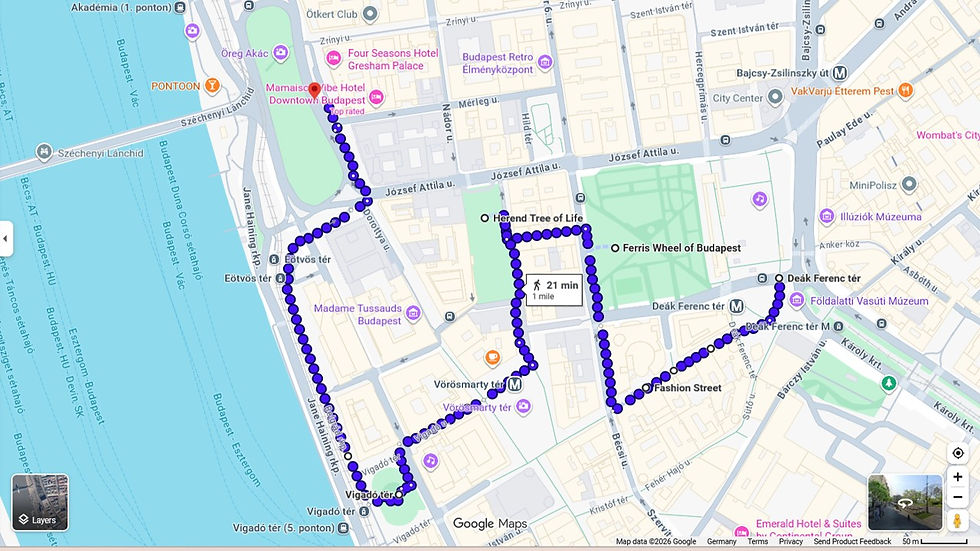
Practical Tips for Day 1 - Afternoon
Distance: approximately 1.5–2 km (around 1-1.2 miles), depending on the exact route taken and how much you explore each square.
Walking time: around 25–30 minutes without stops.
Recommended time: approximately 2–3 hours, allowing time for sightseeing, photographs, shopping and a possible Ferris wheel ride or café stop.
Best time: late afternoon is ideal, particularly if you want to enjoy the Danube views towards Buda in attractive afternoon light.
Accessibility: Most of the route is for pedestrians or on relatively level pavements. The Danube Promenade is also largely flat, although visitors should expect some uneven surfaces in parts of the historic center.
Start your afternoon at Deák Ferenc Square (Deák tér), Budapest's central transport hub and one of the best-known meeting points in the city with stops for several metro, tram and bus lines. From here, you can explore some of the most elegant and lively streets and squares in central Pest before reaching the Danube.

From the square, head towards Deák Ferenc Street, the pedestrian shopping street better known as Fashion Street. The street is lined with international fashion and lifestyle brands, cafés, and restaurants, while its historic buildings provide an attractive backdrop. Although Fashion Street is primarily a shopping destination today, look beyond the shopfronts to appreciate the architecture of central Pest.
Before the crossroad, turn right towards Elisabeth Square (Erzsébet tér), which is one of the liveliest public spaces in central Budapest. It is home to the large Budapest Eye Ferris wheel, which has become a familiar feature of the city centre. Take a short walk through the park and, if you have time, consider riding the Ferris wheel for panoramic views over central Budapest.
While walking through Elisabeth Square, take a moment to see the Danubius Fountain, one of the square's historic landmarks. The fountain was originally created in the 19th century. Look closely at the Danubius Fountain: the male figure at the top personifies the Danube, while the three female figures below represent the Tisza, Dráva and Száva - the four great rivers of the historic Kingdom of Hungary, symbolically brought together in one fountain.


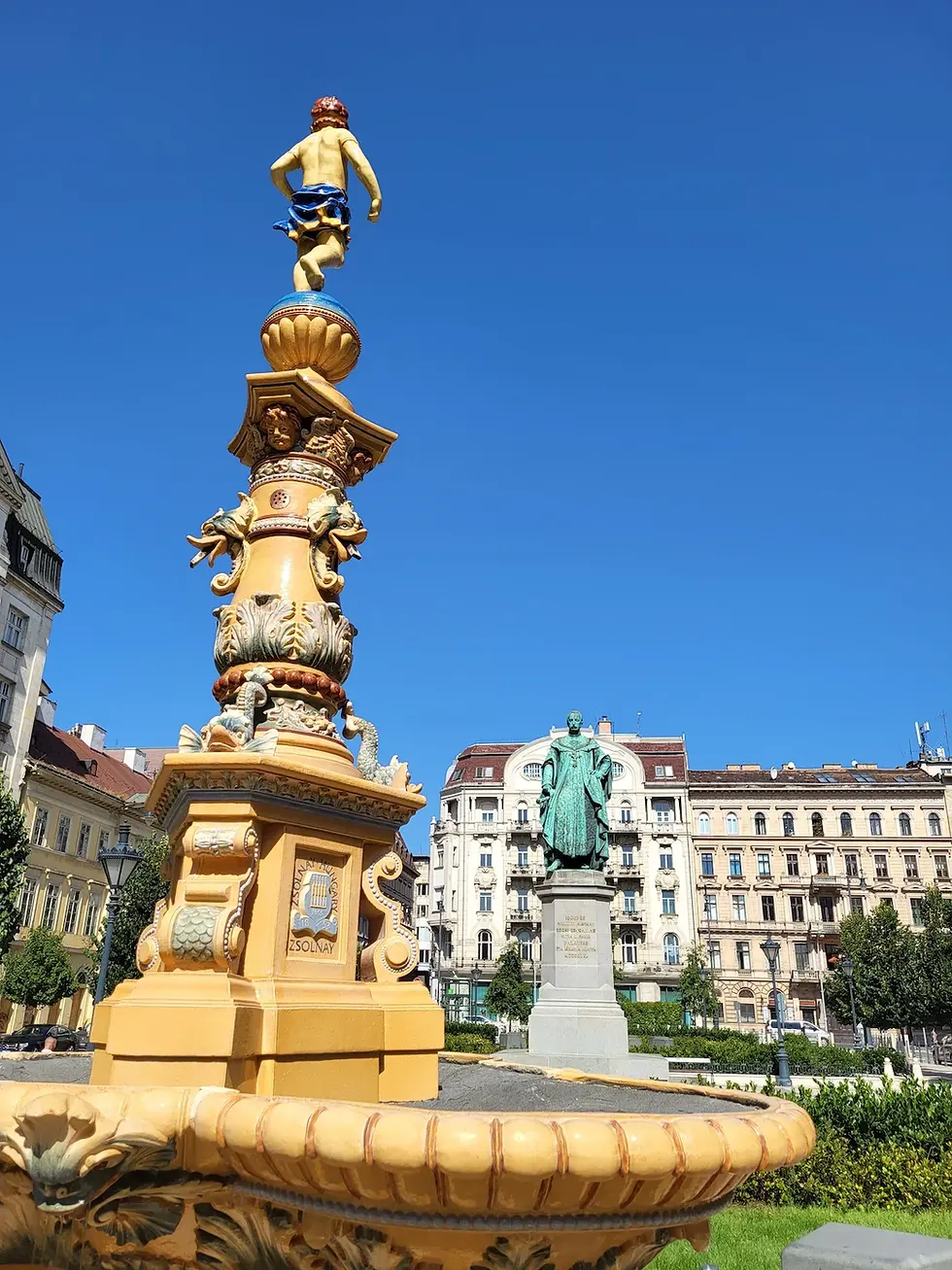
From Elisabeth Square, continue towards József Nádor Square, an elegant, peaceful park just a short walk from the Ferris Wheel. Admire the surrounding historic buildings and the monument to József Nádor, who played an important role in the development of 19th-century Pest. You can see two ceramic fountains on the square, made by Hungary's two best-known ceramic manufacturers, both of which have showrooms nearby.
Zsolnay fountain (Herkulesfürdő Fountain): made from the distinctive glazed ceramics for which the Hungarian Zsolnay manufactory is famous. Look closely at the ceramic decoration: among the reeds are colourful bird motifs, while the fountain's ornate design incorporates the characteristic Zsolnay ceramic work. It is an easy-to-miss but particularly interesting stop for anyone interested in Hungarian architecture, ceramics and decorative arts.
Herendi Tree of Life fountain: Look closely at its branches and "fruits": the porcelain elements are mounted on an internal metal framework, while the fruits are illuminated from within. The tree is decorated with Herend's famous Rothschild pattern, featuring pairs of birds among the leaves, a traditional symbol of togetherness. The Tree of Life is especially atmospheric after dark, when the illuminated porcelain fruits stand out against the water. It is a fascinating example of how one of Hungary's most celebrated porcelain traditions has been transformed into a contemporary work of public art.

Walk a few minutes to Vörösmarty Square, which is one of the best-known squares in central Budapest and a natural meeting point between the historic city centre and the Danube. The square is named after the Hungarian poet Mihály Vörösmarty, whose statue stands at its centre. The elegant buildings surrounding the square and its cafés give it a lively but distinctly historic atmosphere. This is also the northern end of Váci Street, Budapest's famous pedestrian shopping street.

Váci street, Budapest's famous pedestrian shopping street begins here, so you can briefly explore its northern section if you wish. Otherwise, continue directly towards Vigadó Street and the Danube.

From Vörösmarty Square, take Vigadó Street (Vigadó utca) towards the river, and within a few minutes you will reach Vigadó Square, directly beside the Danube. The square is dominated by Pesti Vigadó, one of Budapest's most distinctive 19th-century buildings. Built in a richly decorated historicist style, it has played an important role in the city's cultural life.
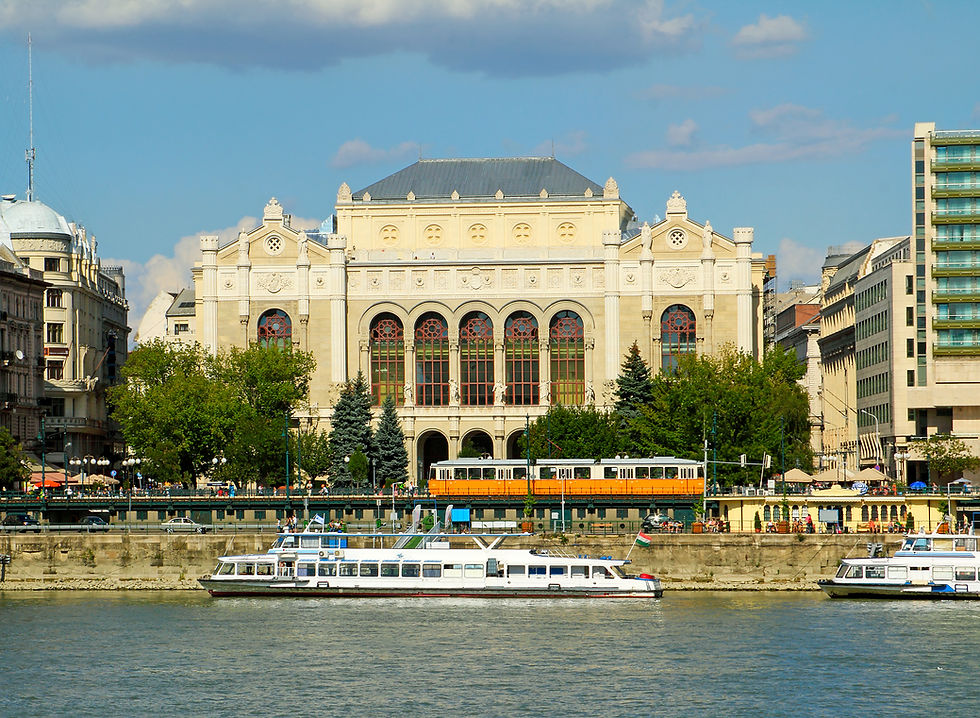
This is also your first opportunity on the walk to stop and take in the panorama across the Danube. From the riverbank, you can see Buda Castle and Castle Hill on the opposite side of the river. Tram Number 2 runs along the Danube Bank on the Pest side, providing the most scenic public transportation route in the city.

From Vigadó Square, turn onto the Duna Corso (Danube Promenade) and continue north along the river. This is one of the most enjoyable short walks in central Budapest. The busy city centre is immediately behind you, while the river opens up in front of you, with spectacular views towards Buda.
As you walk, look across the Danube towards:
Buda Castle and Castle Hill;
the Fisherman's Bastion area higher on the hill;
the Chain Bridge;
and the wooded slopes of Buda.
The promenade is particularly attractive in the late afternoon, when the light falls across the Buda hills and the historic buildings along the river.
Continue along the riverfront towards Eötvös Square, then onward to Széchenyi István Square.
Finish your walk at Széchenyi István tér, at the Pest end of the Chain Bridge. The square is surrounded by some of Budapest's most impressive historic buildings, including the Gresham Palace, now home to the Four Seasons Hotel Gresham Palace. This is an excellent place to pause at the end of the walk. From here, you can admire the Chain Bridge and the dramatic view towards Buda Castle. Use Széchenyi Square as the starting point for your evening plans.

Day 1 - Evening: Experience Budapest After Dark
Budapest changes character after sunset. Walk along the Danube promenade to see the illuminated Parliament Building and the bridges. The evening view is one of the city’s most memorable experiences. You can also book night river cruises online, with welcome drinks or a full dinner. Note that the city's architectural lighting is switched off at night, with the exact timing varying by season and current city regulations.
Which river cruise to take in Budapest? Click the links below!
Important note: due to the low water levels of the Danube river, many cruises are not operating currently

Day 2: Explore the Castle District
Cross to Buda and Explore the Castle District

Practical Tips for Day 2
Allow 4–5 hours for the complete route, longer if you visit a museum or spend substantial time inside Matthias Church.
The walk up from Clark Ádám tér to the Castle District is the steepest section. Comfortable shoes are strongly recommended.
If you want to conserve energy, take the Buda Castle Funicular up and walk down later.
Fisherman's Bastion can become very busy, particularly during the middle of the day. Arriving earlier generally makes for a more pleasant visit.
Don't rush through Tóth Árpád Promenade. It provides a welcome quieter section between the busy Fisherman's Bastion and Buda Castle.
If visiting Matthias Church, check the current visitor hours before setting out, as access can be affected by religious services and events.
The route is much easier downhill after Fisherman's Bastion, but the Castle District itself involves cobblestones, steps and uneven surfaces in places.
If you are travelling with limited time, prioritise Matthias Church, Fisherman's Bastion, Tóth Árpád Promenade and the exterior of Buda Castle rather than trying to fit several museums into the same morning.
Begin your day at Széchenyi István square, on the Pest side of the Chain Bridge. Before crossing the river, take a moment to look around the square. The most impressive building is Gresham Palace, a magnificent Art Nouveau building now operated by the Four Seasons Hotel. From here, you also have one of the classic views of the Chain Bridge, with Buda Castle rising behind it.
Walk towards the bridge and begin crossing the Danube. Cross the Danube via the famous Chain Bridge, one of Budapest's defining landmarks which was the first permanent bridge connecting Buda and Pest. The views are one of the highlights of the walk. Looking downstream, you can see the Danube opening towards the south; looking upstream, the river bends towards Margaret Island and the Parliament area.
The monumental stone lions at the bridge entrances are another familiar Budapest landmark.
Once you reach Clark Ádám Square, you are at the foot of Castle Hill and can start making your way uphill to the Buda Castle District. The Castle District is best enjoyed slowly. This area feels completely different from the lively streets of Pest. Narrow medieval lanes, colourful houses and historic courtyards create the feeling of an old European town above the river.

For this itinerary, we recommend walking up to the Castle District rather than taking the funicular, provided you are comfortable with stairs and an uphill walk. From Clark Ádám square, follow the clearly marked pedestrian route and stairs leading up Castle Hill. The path begins near the Buda end of the Chain Bridge. The climb is relatively short but noticeably uphill, so allow yourself time rather than rushing it. If you prefer to save your energy, the historic Buda Castle Funicular provides an alternative way up the hill (fees apply).
Once you reach the top, continue towards the Holy Trinity Square (Szentháromság tér), the central square of the Castle District. Explore Matthias Church, one of Budapest’s most beautiful religious buildings, with a history stretching back almost 800 years. The church has been rebuilt and transformed several times during its history, and its present appearance largely reflects the major 19th-century restoration led by Frigyes Schulek.
One of its most immediately recognizable features is the spectacular patterned roof, covered with colorful Zsolnay ceramic tiles. The richly decorated interior is equally impressive, combining medieval traditions with the ornate character of the 19th-century restoration. If time allows, go inside the church rather than seeing it only from the outside. The official church website currently provides an English-language audioguide, which is a useful way to understand the building's complicated history. Allow approximately 30–45 minutes for a visit.

From Matthias Church, continue directly to Fisherman’s Bastion, which surrounds part of the eastern edge of the Castle District. The Bastion is one of Budapest's most recognizable landmarks, with its white stone terraces, stairways, arches and seven distinctive towers. Although it looks medieval, the present structure was designed and built at the end of the 19th and beginning of the 20th century as part of the redevelopment of the Castle District.
Its name is traditionally associated with the fishermen who were supposedly responsible for defending this section of the medieval castle walls. Another historical explanation connects it with the former "Town of Fishermen" below the hill. The main reason to visit, however, is the view. Although it has become one of the city’s most photographed locations, the panoramic view explains why it is so popular.

From the terraces, you have an exceptional panorama of the Pest side of Budapest, including:
the Hungarian Parliament Building
the Danube river
Margaret Island
St. Stephen's Basilica
the Chain Bridge
and the rooftops of central Pest
Take some time to walk along the different levels rather than stopping at the first viewpoint. The perspective changes considerably as you move between the towers and terraces. Allow around 30–45 minutes here.
After Fisherman's Bastion, instead of immediately heading towards Buda Castle, turn west and walk along Tóth Árpád Promenade (Tóth Árpád sétány). This is one of the most pleasant and often overlooked walks in the Castle District. It follows the western side of Castle Hill alongside the old castle walls and offers a much quieter atmosphere than Fisherman's Bastion. The promenade is lined with trees and gardens, and in spring it becomes particularly attractive when its Japanese cherry trees are in bloom. The present name dates from 1946 and commemorates Hungarian poet Árpád Tóth.
Along the way, look out for the equestrian statue of General Artúr Görgei, the Ancient Source fountain, and other monuments and archaeological remains incorporated into the Castle District. The promenade is also a good place to slow down after the crowds around Matthias Church and Fisherman's Bastion.

Continue along the promenade and make your way towards the Buda Castle Palace. The huge palace complex dominates the southern part of Castle Hill and has been rebuilt many times over the centuries. The medieval royal palace was developed extensively during the reign of King Matthias Corvinus and later transformed under the Habsburgs. The present palace complex is largely the result of 18th- and 19th-century rebuilding, followed by extensive reconstruction after the severe destruction suffered during World War II.
Explore the Palace Courtyard and terraces to find:
the Matthias fountain
the Habsburg Gate
the Savoy Terrace
the equestrian statue of Prince Eugene of Savoy
the panoramic view from the palace terrace
the National Gallery building
Today, the palace houses major cultural institutions, including the Hungarian National Gallery and the Budapest History Museum. For a two-day itinerary, it is not necessarily recommended trying to visit both museums. Instead, explore the palace courtyards and terraces and enjoy the views from the southern part of Castle Hill. If you are particularly interested in Hungarian art, however, the Hungarian National Gallery can easily become the main attraction of this part of the day.

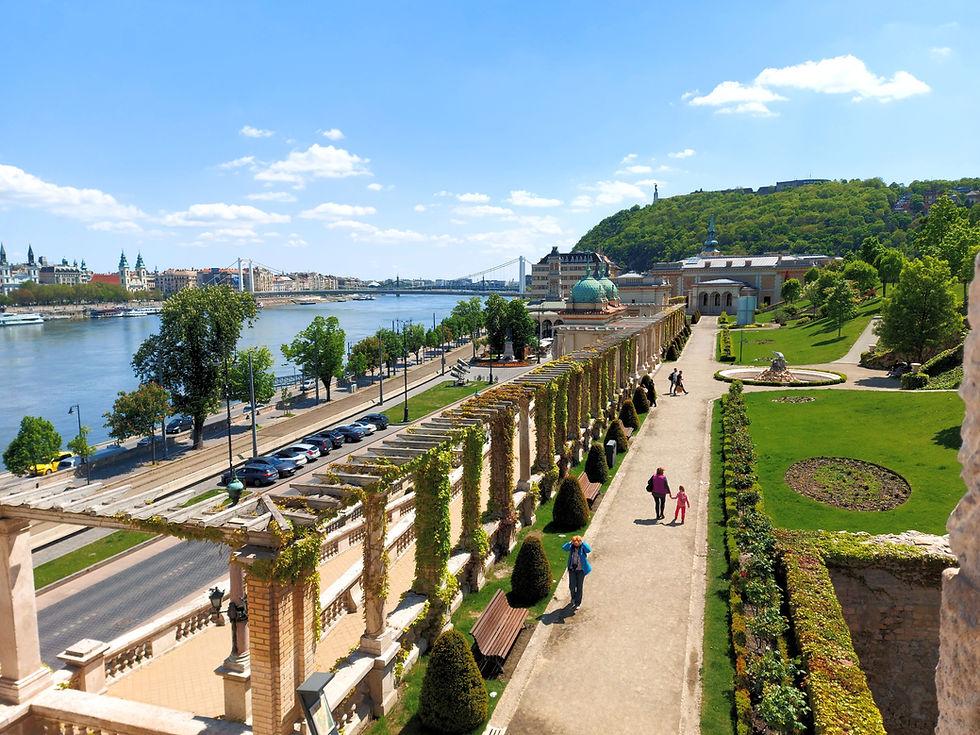
From Buda Castle, continue downhill towards the Castle Bazaar (Várkert Bazár). The descent takes you from the hilltop palace towards the Danube and provides another change of scenery - you can take the stairs or the elevator. The Castle Bazaar is a beautifully restored complex at the foot of Castle Hill, originally built in the 19th century as part of the riverside development of Buda. The complex combines historic architecture, gardens, terraces and contemporary cultural spaces. This is a particularly satisfying place to finish the walk because you have gradually travelled from the top of Castle Hill back down to the Danube.
Once you reach the bottom, you can continue along the riverfront, stop for lunch or a coffee, or use public transport to continue your sightseeing.


Where to Stay in Budapest for a 2-Day Visit
For a two-day trip, location matters. Budapest is easy to explore, but staying in the right neighborhood can save valuable time.

City Center (Pest) - best for first-time visitors
District V is the ideal location for most first-time visitors, within walking distance of the:
Parliament Building
St Stephen’s Basilica
Danube promenade
Chain Bridge
cafés and restaurants
This area is especially convenient and easy to navigate.

Jewish Quarter (Pest) - best for nightlife
District VII is a great choice for travelers who enjoy:
ruin bars
nightlife
creative neighborhoods
cafés, restaurants
Busier and more energetic than District V, especially in the evening (also known as the Party district).

Castle District (Buda)- best for history lovers
Staying in District I offers:
historic streets
quieter evenings
incredible views of the city from Buda Castle
Matthias Church
Fisherman's Bastion
National Gallery
It is less convenient if you want to enjoy the Budapest nightlife.
Click the below links to see some of the Hotel accommodations by location!
City Center
(Pest)
Luxury
Upper-mid range
Boutique
Good value
Jewish Quarter (Pest)
Luxury - historic
Elegant
Mid-range Boutique
Good value
Castle District (Buda)
Luxury
Historic
Boutique - design
Good value
Note: Gems of Budapest is not associated with any of the above hotels, we do not earn commission on any bookings made. The list is only presented for informational purposes, categories are subjective.
Where to Eat During a 2-Day Visit in Budapest
Budapest has many tourist restaurants, but visitors who look carefully can discover a much richer food culture. Rather than eating every meal near the main tourist attractions, plan one memorable dinner each day and keep lunch more relaxed. Budapest has an excellent dining scene, from traditional taverns to Michelin-recognised restaurants, and one carefully chosen evening meal is often a highlight of the trip. Hungary's culinary reputation has grown significantly in recent years, with both historic favorites and contemporary restaurants earning international recognition.
Click the below links to see some of the restaurants by location!
City Center
(Pest)
Luxury - ethnographic
Upper-range authentic
Mid-range Hungarian
Good value Hungarian
Jewish Quarter (Pest)
Hidden gem - original
Authentic - live music
Mediterranean - garden
Good value - fun place
Castle District (Buda)
Luxury - panoramic
Contemporary
Traditional Hungarian
Classic home-style, fish
Note: Gems of Budapest is not associated with any of the above restaurants, we do not earn commission on any reservations made. The list is only presented for informational purposes, categories are subjective.
Try Traditional Hungarian dishes
Goulash soup - Hungary’s most famous comfort food
Chicken paprikash - a classic paprika-based dish
Stuffed cabbage - traditional Hungarian home cooking
Lángos - fried dough often topped with sour cream and cheese (street food)
Dobos cake - a famous Hungarian dessert, best enjoyed in famous cafés
If you want to find out more about Hungarian cuisine, read our blog post:
Enjoy a historic café experience
Budapest’s coffeehouse culture is one of its hidden treasures. For first-time visitors to Budapest seeking a classic coffee house experience, the top iconic spots to visit are the New York Café, Café Gerbeaud, and Centrál Grand Cafe & Bar. These historic institutions offer exceptional coffee paired with grand architecture and rich literary heritage.

The Grand Historic Cafés
Location: Erzsébet körút 9-11 (District VII)
Price Range: High (luxury setting with premium tourist pricing)
Often called the most beautiful cafe in the world, it features dramatic Italian Renaissance-style marble columns, gilded stucco, and glowing chandeliers. Expect a queue or book online in advance.
Location: Vörösmarty tér 7-8 (District V)
Price Range: High
Founded in 1858, this legendary pastry shop and cafe boasts luxurious muted green and gold furnishings. Famous for traditional Hungarian cakes like Dobos torte and somlói galuska.
Location: Károlyi utca 9 (District V)
Price Range: Moderate to High
Operating since 1887, this historic Art Nouveau hub was once a favorite meeting place for poets and writers. It delivers an authentic old-world intellectual atmosphere with high ceilings.
Classic Artistic and Atmospheric Café Spots
Location: Andrássy út 29 (District VI)
Price Range: Moderate
Located directly across from the Hungarian State Opera House, established in 1898. It is intimate, elegant, adorned with huge mirrors, and frequently patronized by local theater performers.
Location: Ferenciek tere 10 (District V)
Price Range: High
Tucked inside the stunningly restored Párisi Udvar arcade, offering breathtaking neo-Gothic and Moorish architectural details paired with fine pastries and live music.
Note: Gems of Budapest is not associated with any of the above cafés and restaurants, we do not earn commission on any reservations made. The list is only presented for informational purposes, price categories are subjective.
The best Hungarian meals are not always in the most photographed locations. Look for places where locals are eating traditional dishes rather than restaurants advertising “authentic Hungarian cuisine” in multiple languages. Hostesses inviting people walking by is a red flag for tourist traps. |
Did you know?
We have lots of other posts for you to enjoy!
Click the below links!
See all Gems of Budapest posts: |


